
About Hearing
Bimodal Hearing
A cochlear implant in one ear and a hearing aid in the other. As an authorised Starkey agent and an authorised MED-EL distributor, Harmony can care for both sides of your hearing in one place.

What is bimodal hearing?
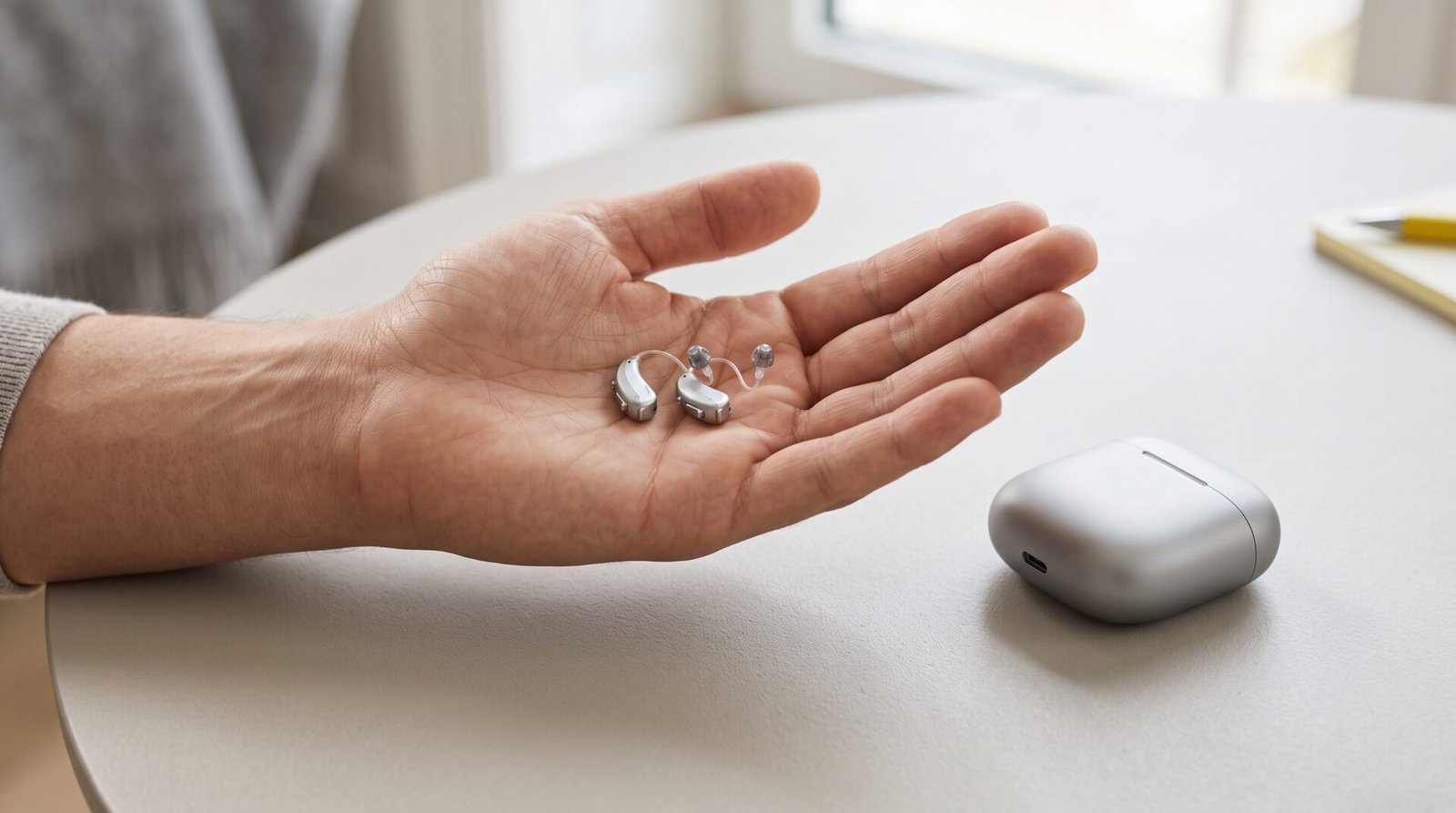
Bimodal hearing combines a cochlear implant in one ear with a hearing aid in the other. Starkey explains the name simply: “bi” means two and “modal” means mode, so you hear through two different ways at once.
MED-EL suggests bimodal hearing for people with profound hearing loss on one side and milder hearing loss on the other, and says it gives better sound clarity than a hearing aid or a cochlear implant alone.
Who it can suit
- People with profound hearing loss in one ear and milder loss in the other
- People struggling to understand conversations with hearing aids alone
- People whose hearing in one ear is much poorer than the other, while both ears still need help
Based on MED-EL and Starkey.
Two devices, one team
Each device does a different job. Together, they give your brain sound from both sides.
| Hearing aid | Cochlear implant | |
|---|---|---|
| What it does | Makes sound louder | Stimulates the inner ear to send sound signals to the brain |
| Hearing loss | Mild to severe | Severe to profound, when a hearing aid is no longer enough |
| Surgery | No | Yes, the implant is placed under the skin |
| How it is worn | In or behind the ear | Audio processor worn on or above the ear |
Source: MED-EL.
Benefits of hearing with both ears
Speech in noise
MED-EL reports significantly better speech understanding in noisy places such as restaurants and family gatherings.
Less listening effort
Hearing with both ears takes less mental effort, so everyday noise is less exhausting (MED-EL).
Knowing where sounds come from
Both MED-EL and Starkey note better sound localisation when the two ears work together.
Music and natural sound
MED-EL lists better music enjoyment and more natural sound quality, and Starkey highlights music appreciation.
Results differ from person to person. Your audiologist will explain what you can expect.
Streaming to both ears
MED-EL’s bimodal streaming sends sound from your phone to the cochlear implant and the hearing aid at the same time.
- iPhone: a MED-EL audio processor and a Starkey hearing aid, through the exclusive DualSync partnership between MED-EL and Starkey
- Android 12 and newer: a MED-EL audio processor and hearing aids that support Audio Streaming for Hearing Aids (ASHA)
- MED-EL processors: SONNET 3, SONNET and SONNET 2 with AudioStream, and RONDO 3 with the AudioStream Adapter
Starkey lists its Omega AI+, Edge AI and G Series AI wireless hearing aids as compatible with MED-EL processors. Compatibility depends on the exact models, so ask us to check yours.
Why both ears in one place matters
Because Harmony fits Starkey hearing aids and provides follow-up care for MED-EL implants, we can look after both ears together and help both devices work well as a pair.
The path to bimodal hearing
Step 1
Assessment
Your audiologist checks whether a cochlear implant is an option for your poorer ear.
Step 2
Implant surgery
An ENT surgeon places the implant. MED-EL says it takes about two hours, with a return to daily routine after a few days.
Step 3
Activation
The implant is switched on a few weeks after surgery. You keep using your hearing aid in the other ear (MED-EL).
Step 4
Listening practice
Daily listening exercises help your brain combine the sound from both ears.
Questions about bimodal hearing
MED-EL cochlear implants work with any brand of hearing aid, including the one you are wearing now (MED-EL). Your audiologist will check that it still suits your hearing.
No, bimodal hearing works with any brand. Streaming from an iPhone to a MED-EL processor and a hearing aid at the same time works with Starkey hearing aids, through the DualSync partnership.
No. MED-EL notes that you can keep using your hearing aid in your other ear after the implant is switched on.
MED-EL says combining both gives better sound clarity than a hearing aid or a cochlear implant alone, especially in noise. Results differ from person to person.
MED-EL says about two hours, and most people return to their daily routine after a few days.
Sources: MED-EL: Bimodal hearing · MED-EL: Bimodal streaming · Starkey: Bimodal hearing solution
This page is for general information only and is not medical advice. Please see an ENT doctor or audiologist for advice about your own hearing.
Hearing aids not enough on one side?
Book an assessment at Harmony. We will check both ears and explain whether bimodal hearing could help you.