Not every hearing loss is best treated with a hearing aid or a cochlear implant. MED-EL bone conduction and middle ear solutions offer other routes to sound, and we can help you understand them.
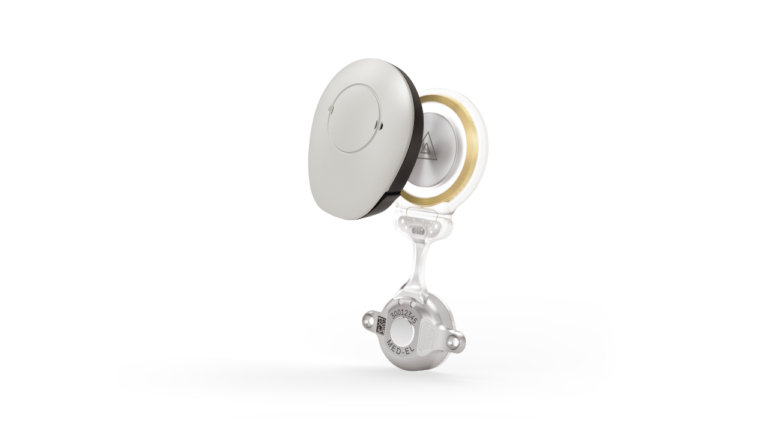
Sits completely under the skin and sends sound through the skull bone to the inner ear, bypassing the outer and middle ear. For conductive and mixed hearing loss and single-sided deafness. No open wound and no daily skin care.
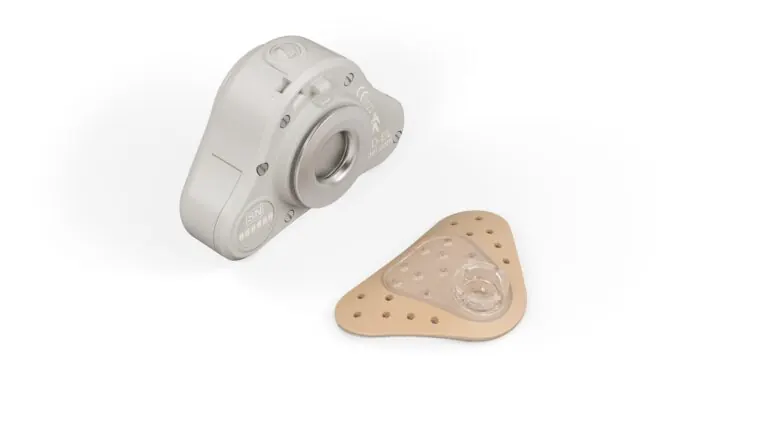
An adhesive adapter sits behind the ear and the audio processor clicks onto it. There is no surgery and no pressure on the skin, so you can try it before you decide. For conductive hearing loss and single-sided deafness, at any age.
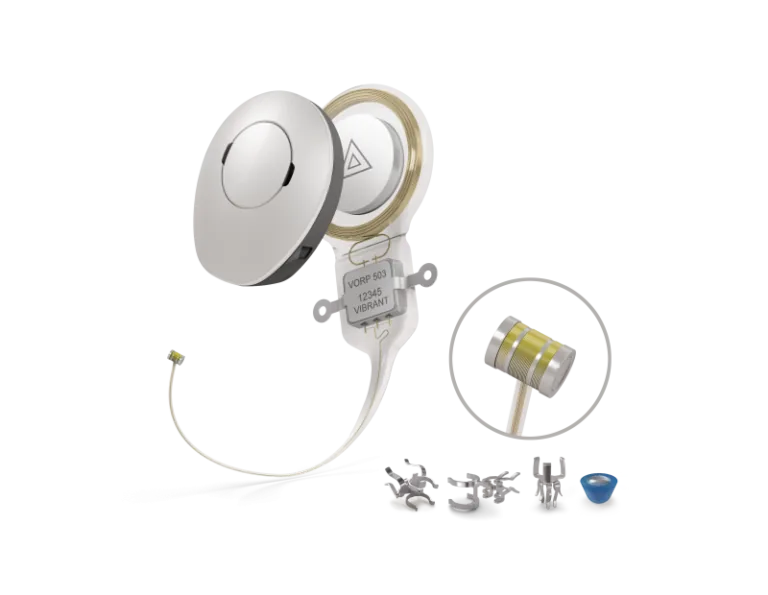
A tiny Floating Mass Transducer, smaller than a grain of rice, vibrates the structures of the middle ear directly. For mild-to-severe sensorineural, conductive or mixed hearing loss, from 5 years of age. Nothing sits in the ear canal.
We hear partly through the bones of the skull. A bone conduction device turns sound into vibrations and passes them through the bone straight to the inner ear, so damage to the ear canal or middle ear no longer blocks the sound.
For single-sided deafness, the device picks up sound on the deaf side and sends it to the inner ear on the hearing side.
How a middle ear implant works
The SAMBA 2 audio processor picks up sound and sends it to the implant under the skin. The implant turns it into mechanical vibrations that move the middle ear structures, and these pass the sound on to the cochlea.
MED-EL notes that because sound is delivered directly, rather than made louder in the ear canal, there is no whistling feedback and nothing blocks the ear.
At a glance
How the three MED-EL solutions compare.
Feature
BONEBRIDGE
ADHEAR
VIBRANT SOUNDBRIDGE
Type
Active bone conduction implant
Non-surgical bone conduction system
Active middle ear implant
Surgery
About 1 hour, general anaesthesia
None
1 to 2 hours, general anaesthesia
Hearing loss
Conductive, mixed, single-sided deafness
Conductive, single-sided deafness
Mild-to-severe sensorineural, conductive, mixed
Audio processor
SAMBA 2
ADHEAR audio processor
SAMBA 2
Battery life
About 8 to 10 days
Up to 300 hours, about two weeks
About 8 to 10 days
Start hearing
A few weeks after surgery
Straight away
About 6 to 8 weeks after surgery
MRI
MR conditional at 1.5 Tesla
Nothing implanted
MR conditional at 1.5 Tesla
Figures from MED-EL product information. Battery life depends on use. Suitability is decided after a full assessment.
Your journey
For the implants, the path has three stages. ADHEAR needs no surgery at all.
Step 1
Assessment
Hearing tests show the type and degree of your hearing loss, and your ENT surgeon checks which option suits you. With ADHEAR you can try bone conduction before you decide.
Step 2
Surgery
BONEBRIDGE surgery usually takes about an hour, and VIBRANT SOUNDBRIDGE 1 to 2 hours, under general anaesthesia. Most people are up and about the next day.
Step 3
Activation
Once the area has healed, the audio processor is fitted and switched on. With VIBRANT SOUNDBRIDGE, a hearing aid can often be used until then.
Abutment-type bone-anchored aids use a screw that passes through the skin, leaving a site that needs daily care. Headband-type aids press on the skin and can be uncomfortable. BONEBRIDGE sits completely under the skin, so there is no open wound and no pressure.
The latest BONEBRIDGE and VIBRANT SOUNDBRIDGE implants are MR conditional at 1.5 Tesla and covered by the MED-EL lifelong MRI guarantee. X-ray and CT scans have no restrictions. Always tell the radiology team that you have an implant.
MED-EL lists ADHEAR for all ages and VIBRANT SOUNDBRIDGE for children from 5 years. Your ENT surgeon will advise on the right option and timing for your child.